
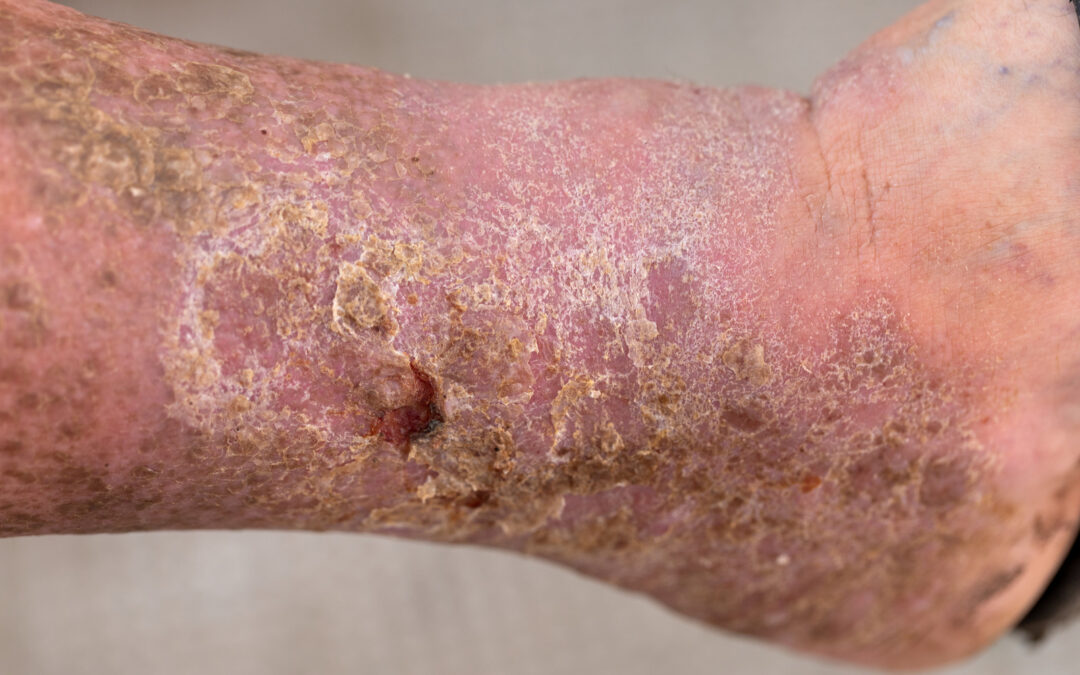
An open sore that refuses to heal can signal more than damaged skin. PE Vein explains how chronic venous insufficiency can cause venous leg ulcers, which warning signs require attention and what recovery may involve. Effective venous ulcer treatment addresses both the wound and the underlying circulation problem contributing to it.
When a sore on your lower leg remains open week after week, another dressing may not resolve what is happening beneath the skin. Poor venous circulation can obstruct healing and allow the wound to return.
At PE Vein, we look beyond the visible damage to determine whether an underlying venous condition is contributing to the wound and guide appropriate venous leg ulcer treatment.
What Causes a Venous Leg Ulcer?
Healthy leg veins have one-way valves that prevent blood from flowing backwards as it travels towards the heart. When these valves weaken or become damaged, blood can collect in the lower leg. This condition, known as venous reflux, increases pressure inside the veins and gradually damages the surrounding skin.
A minor cut or knock may then develop into a persistent open wound. Several factors can increase your risk, including:
- Varicose veins or a family history of venous disease.
- Previous deep vein thrombosis or leg injuries.
- Limited mobility or prolonged sitting or standing.
- Excess body weight, which adds pressure to the leg veins.
- Previous ulcers or chronic lower-leg swelling.
Effective leg ulcer treatment often needs to address more than the wound itself. Dressings may support healing, but they cannot correct the circulation problem contributing to the damage.
Which Symptoms Should You Recognise?
A venous ulcer usually develops between the ankle and knee, often on the inner lower leg. The wound may heal slowly, leak fluid or repeatedly reopen.
You may also notice:
- Aching, heaviness or swelling in the affected leg.
- Itchy, flaky or inflamed skin.
- Brown or reddish discolouration around the ankle.
- Hardened or thickened skin.
- Increasing pain, warmth or a foul-smelling discharge.
Seek prompt medical attention if the wound becomes more painful, develops a foul smell or shows signs of infection. Not every leg wound has a venous cause, so professional assessment remains essential before starting venous ulcer treatment.
What Does Treatment and Recovery Involve?
Recovery depends on factors such as the ulcer’s size and duration, circulation and the extent of any underlying vein damage. A clinician may recommend wound cleaning, suitable dressings and professionally managed compression to reduce swelling and encourage blood to move upwards.
Where faulty veins contribute to the wound, varicose ulcer treatment may include a procedure that targets the affected vein. Your treatment plan will depend on your clinical findings and overall health.
You can support recovery by following dressing and compression instructions, remaining active as advised, elevating the leg and attending every follow-up appointment. Healing may take several months, while ongoing care can help protect the skin after the wound closes.
A persistent leg wound deserves proper assessment. Book an assessment with PE Vein to identify the possible cause and discuss an appropriate venous leg ulcer treatment plan.
FAQs
How do specialists determine whether a leg ulcer has a venous cause?
Before recommending leg ulcer treatment, a clinician assesses the wound, symptoms and medical history. Circulation tests or an ultrasound may help identify venous reflux and rule out other causes that require a different approach.
When does a venous leg ulcer require urgent medical attention?
Seek prompt care if you develop worsening pain, spreading redness, warmth, swelling, fever or foul-smelling discharge. These changes may indicate infection and require attention alongside your venous ulcer treatment.
Can venous leg ulcers return after they have healed?
Yes. Recurrence remains possible when faulty veins continue placing pressure on the skin. Effective venous leg ulcer treatment may therefore combine wound care, ongoing compression and treatment of the underlying venous reflux.
Recent Comments