
If you’ve looked into treatments for varicose or spider veins, you’ve probably seen several options pop up. But with all the unfamiliar terminology used in the industry, how do you know what each treatment involves and whether it’s right for you?
From cryo laser and cryo sclerotherapy to traditional laser and injection treatments, PE Vein breaks down the terminology in this handy guide. Get to know the different approaches and explore which options may be suitable for your veins.
Types of Vein Treatments Explained
Although these treatments share the goal of closing or reducing affected veins, they use different techniques to achieve this. Here’s a closer look at how each one works.
CLaCS
Cryo-Laser and Cryo-Sclerotherapy (CLaCS) is a treatment approach that combines laser therapy, injection sclerotherapy and skin cooling to target selected spider veins and smaller varicose veins. Vein mapping may be used to identify affected vessels and guide treatment planning.
During CLaCS vein treatment, laser energy and an injected solution work together to close targeted veins, while cold air helps protect the skin and minimise discomfort. This non-surgical CLaCS cosmetic treatment can improve the appearance of suitable spider veins and smaller varicose veins.
Laser Vein Treatment
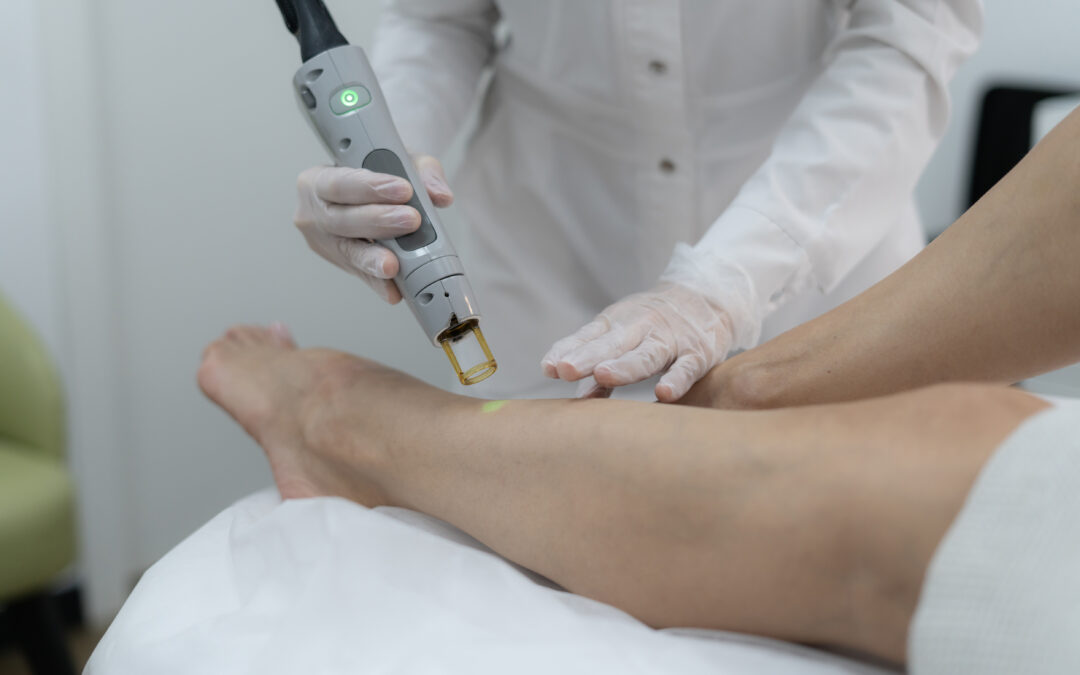
Laser vein removal uses focused light energy to target affected blood vessels. The laser delivers heat to the targeted vessel, which can cause it to shrink or close. Over time, the body gradually absorbs the treated vessel, making it less visible.
By targeting veins through the skin, transdermal laser treatment can help improve the appearance of visible surface vessels without the need for surgical incisions.
Sclerotherapy
Sclerotherapy is an injection treatment that uses a special solution called sclerosant to close off affected veins. Once injected, the solution irritates the vein lining, causing the treated vein to close and blood to be redirected through other functioning veins. Over time, the body naturally absorbs the treated vein. There are two common approaches:
- Micro-sclerotherapy: This liquid injection treatment uses a sclerosant delivered through a very fine needle, making it a common option for sclerotherapy for spider veins and other smaller surface vessels.
- Foam sclerotherapy: Uses a foamed solution that can spread through larger or more twisted veins, making it useful for treating certain types of varicose veins.
How Do You Choose the Right Vein Treatment?
Before selecting a procedure, a vein specialist may use a duplex ultrasound assessment to examine blood flow, map affected vessels and identify any underlying vein problems. Your specialist will also consider several factors when choosing a treatment approach:
- Vein size and location: Different techniques are suited to different types of veins.
- Underlying vein health: Poor blood flow or deeper vein problems may require additional treatment.
- Your symptoms: Discomfort, swelling and other symptoms can influence the recommended approach.
- Treatment goals: Whether you’re seeking relief from symptoms, improving the appearance of visible veins or both.
Ultimately, the best approach is one that addresses your individual vein condition rather than relying on a one-size-fits-all solution.
Find Out Which Vein Treatment Is Right for You
Understanding the differences between cryo laser and cryo sclerotherapy, traditional laser treatment and sclerotherapy is a useful starting point.
PE Vein offers a range of specialist vein treatments, supported by diagnostic imaging and individual treatment planning. Contact the team today to arrange a consultation and explore the options available for your vein concerns.
FAQs
What is the difference between CLaCS and traditional sclerotherapy?
CLaCS combines laser therapy, injection sclerotherapy and skin cooling to treat selected spider veins and smaller varicose veins. Traditional sclerotherapy uses an injected solution to close affected veins without laser treatment. The most suitable approach depends on the size, location and condition of your veins.
Is CLaCS vein treatment painful?
CLaCS vein treatment uses cold air to help minimise discomfort during laser and injection therapy. However, patients may still experience some discomfort, and individual responses vary. Your vein specialist can explain what to expect during the procedure.
Is laser vein removal suitable for all types of veins?
No. Laser vein removal may be suitable for certain visible surface veins, but larger or deeper varicose veins may require different treatments. A professional vein assessment can help determine whether laser therapy, sclerotherapy or another approach is appropriate.
How do I know whether I need CLaCS cosmetic treatment or sclerotherapy for spider veins?
The choice depends on your vein size, location, symptoms and treatment goals. A vein specialist may use diagnostic imaging to assess your veins and identify underlying circulation problems before recommending a suitable treatment approach.
Recent Comments